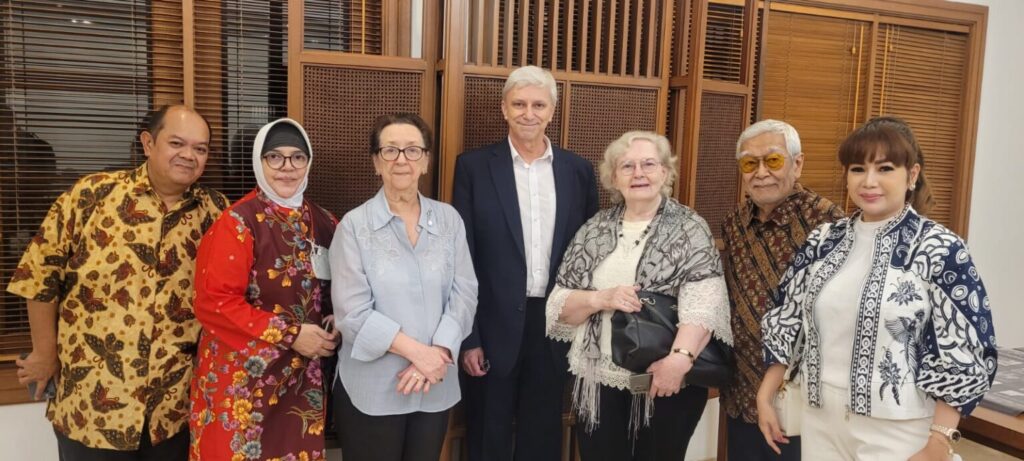



Zdenka Poláčková
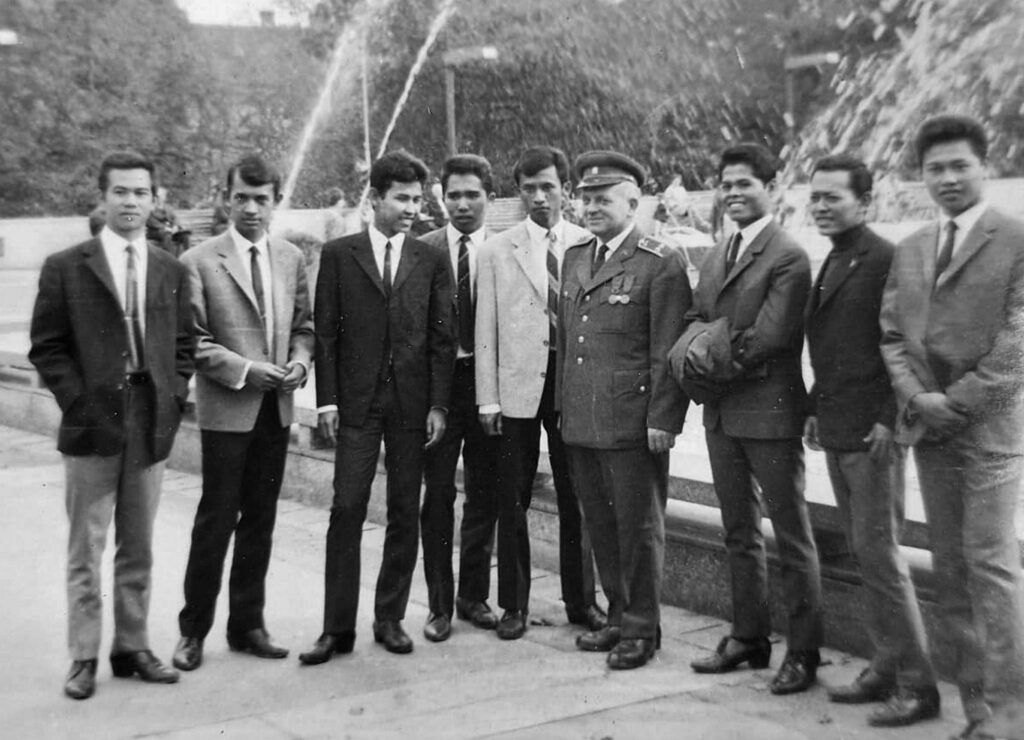
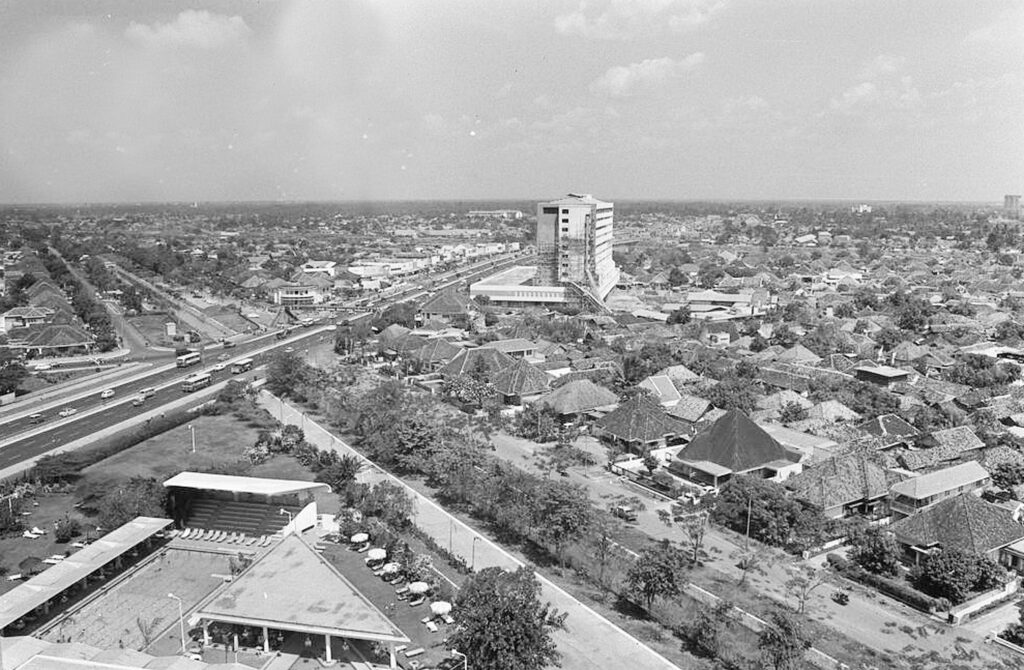
In September 1969, I found myself in Indonesia with my friend Hana. The plane landed in Kemayoran, Jakarta. We were flying to see our boys, with whom we had promised each other a year ago that we would fly to Indonesia to meet them. It was not easy to say goodbye to my parents, siblings, my native country, the places where I went to school and lived. I had no idea what awaited me and when I would see everyone again. My boyfriend Tom, a student at the Indonesian Air Force Military Academy, was sent by the Indonesian government to Czechoslovakia with his friends to continue his studies in Brno at the Antonín Zápotocký Military Academy. After completing his studies, they returned to Indonesia. I was born in a small village in Moravia. A friend introduced me to Tom. By then I was already living and working in Brno.
In Indonesia, rice is eaten for breakfast, lunch and dinner with various side dishes.
We spent our first night in a new country at the aunt of Tom’s friend. I still have two memories of it. We went to take a bath before going to bed. At home we were used to a bathtub, but there, in the bathroom, there was just a tall concrete tank filled with water. No bathtub, no shower. At first, we didn’t know what or how. But eventually we both climbed into the tank and started washing and splashing. Suddenly there was a knock on the door, and our hosts just rolled their eyes and explained to us that we were to stand by the tank and pour water over ourselves with containers with handles that were adapted for that purpose. Poor people, because of us their housekeepers had to drain the tank and clean it all out. Today, of course, showers are commonly used. Then, when we went to bed, they left a small light on for us. I couldn’t fall asleep. And suddenly I see something like a small brown lizard crawling along the wall. They call it a cicak. I’ve never been so scared before. But these are rather humorous experiences from the many cultural shocks that awaited me here at the beginning. The next day, I took the train with Tom to Yogyakarta in Central Java. Tom came from a village that is about 20 km from the city. We arrived there by dokar, a horse-drawn carriage. In the village, a bunch of children surrounded me, pointing out how white I was.
At first, we stayed in a house that Tom’s brother and his family lived in. The whole family received me very nicely. For example, they wanted to honor me, so they bought rice, a type of rojolele, which is considered the best here, but also has a strong smell when cooked, which I then felt like a stench. When I entered the dining room, the smell made me feel sick. So, my sister-in-law immediately sent her helper to buy a bag of potatoes so that I would have something to eat. In Indonesia, rice is eaten for breakfast, lunch and dinner with various side dishes. Tom’s brother had one child, a little girl, Atiek. At that time, I couldn’t speak Indonesian yet. They spoke Javanese at home. I spent a lot of time with Atiek. I learned from her, so at the beginning of my stay I could communicate in a little Javanese. And for the rest, I used gestures.
Every day, Tom took a bus to Yogyakarta for work. He taught at the Military Academy. He left in the morning and arrived late in the afternoon. My niece Atiek helped me fill the time until Tom came home. I really wanted to learn how to cook local dishes. The family had a housekeeper who cooked and took care of the house. She taught me how to cook in the kitchen. But when I proudly placed a plate of my creation, opor ayam (a traditional Javanese dish, spicy chicken in coconut milk), on the table in front of my brother-in-law, he started tasting it and telling me what was missing. That’s when I vowed that I would never try to cook again. And so it happened, in all the years I have been in Indonesia, I have always had a helper cook for me. There was a boulder in the yard, poking out of the ground. I climbed on the boulder and spun around on it. Suddenly, a group of people were looking at me in horror. I rather ran into the room. At that time, I did not yet know that it was a sacred stone, where spirits live, protecting the house. When Tom came home from work, I told him what had happened. He went to ask my father what was going on. He came back a moment later and reassured me. Father told him that the spirits had accepted me, so everything would be fine.
I had my wedding dress made in Brno. It was made of white lace, woven with gold thread
We had our wedding two and a half months after my arrival. We had it at the town hall. We were both Catholics, but the village priest told Tom that since we were living together in the same house and in the same room, we could not be married in church. But eventually, after a year or so, we were married as Catholics. A Dutch priest worked at the Academy. When he found out that Tom and I were Catholics, even though we already had two children at the time, he married us and baptized our little girls at the same time. I had my wedding dress made in Brno. It was made of white lace, woven with gold thread. Miniskirts were the fashion at the time. My relatives would have liked me to wear Javanese wedding clothes for the occasion, batik fabric with certain hand-painted patterns intended for weddings, and a blouse called a kabaya. But I was proud of my white lace dress, so I refused the Javanese wedding dress and face makeup.
After the wedding, we had to wait another year before we moved from the village to Yogyakarta and then two years later to the military complex in Yogyakarta. That’s where our son was born. In 1980, my husband was transferred to Mabes in Jakarta. We lived there in a military compound. My husband also lectured at several universities in Jakarta. My husband retired in 1999 and died a year later. I bought a house in a complex near Jakarta. There are still a few Czech women here in Jakarta and the surrounding area. We only meet occasionally. Jakarta is really big. We each live in a different, quite distant part of the city. But we are still in touch. I have visited the Czech Republic and my family several times, including with my children. The last time I was there was in 2016. My parents passed away a long time ago. I often look at pictures from Prague and Bohemia on the internet; everything looks so beautiful there. But I don’t know if I will still be able to visit my native country at my age.
This text was created based on an interview with Mrs. Zdenka, recorded for us by Iva Beznosková from the Czech expatriate association Bohemindo Yayasan in Jakarta in May 2026.