


Gabriela Drašarová
One of the favorite Czech writers of my youth was Bohumil Hrabal. His “Closely Watched Trains” and “Cutting It Short” are firmly embedded in the collective memory of my entire generation. The title of the movie version of Hrabal’s novel “How I Served the King of England” has now inspired me to sketch my own life and professional story. I would call it: “How I Played First Violin in Naples for 30 Years.”
I was born in Pilsen during the height of the totalitarian regime into a rather unconventional family. My father was a lawyer, and as a non-party member, he was fired from the court. He took an electrician’s course and did manual labor. My mother was a third-generation pharmacist. After the confiscation of our family home and pharmacy, she remained in the profession as a rank-and-file employee. There were six of us in a large apartment on Republic Square: my parents, my older brother, me, my maternal grandmother, who was divorced, and her faithful, long-time maid. After the Communist coup, the maid had no relatives left and decided to stay with us as a housekeeper in exchange for board and living. My grandmother was a beautiful and educated woman, a piano virtuoso, who came from the prominent, well-to-do von Lenk family. She managed a music school in Rokycany without ever joining the Communist Party. She used to bring her own silver cutlery to the school canteen, and nobody found it unusual. Every afternoon she taught at home, giving private lessons. I envied the students because they played a beautiful, polished grand piano that no one in the family was allowed to touch; we walked around it on tiptoe so it wouldn’t go out of tune. Thus, I grew up constantly listening to music. Grandmother would occasionally take me for walks to the shops, always aiming for music supplies and bookstores. I was amazed that everyone addressed her as “Madame” instead of “Comrade.”
it was discovered that I had absolute pitch. My father decided that I would play the violin
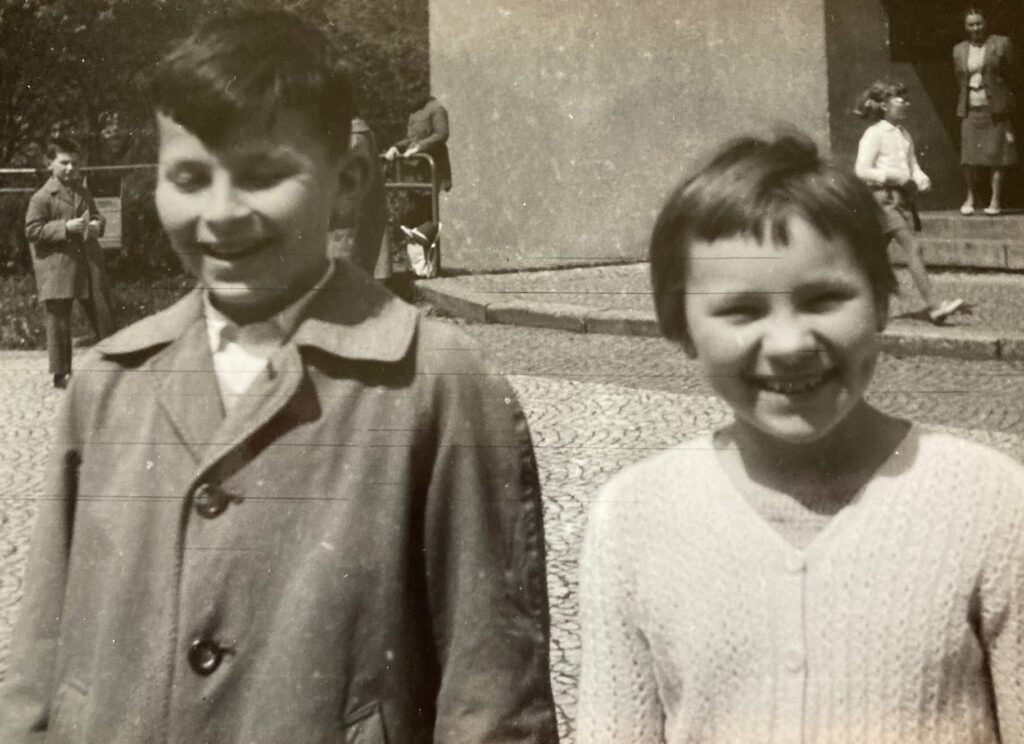
For my sixth birthday, I was asked to sing. In doing so, it was discovered that I had absolute pitch. My father decided that I would play the violin. Grandmother took me to her friend Wally Talichová-Loukotová, a well-known Pilsen violinist. I began studying under her, and her son Jan Talich, the founder of the Talich Quartet, and we played our first duets together. The Talich family later moved to Prague and recommended me to Professor Miloš Macháček, who was known for his numerous pedagogical achievements. I started participating in the Kocian Violin Competition in Ústí nad Orlicí, where I met Václav Hudeček (still one of the most famous Czech violonists). Our long-standing friendship dates back to that time. My daily routine was strictly set by my parents so they could supervise my regular practice. Both were employed and returned home in the afternoon while grandmother was teaching. The only solution was to get me out of bed at 5:30 AM so I could practice until 7:30 AM with piano accompaniment. Another hour and a half of practice awaited me in the afternoon. It remains a mystery to me that no one in the building protested over the years.
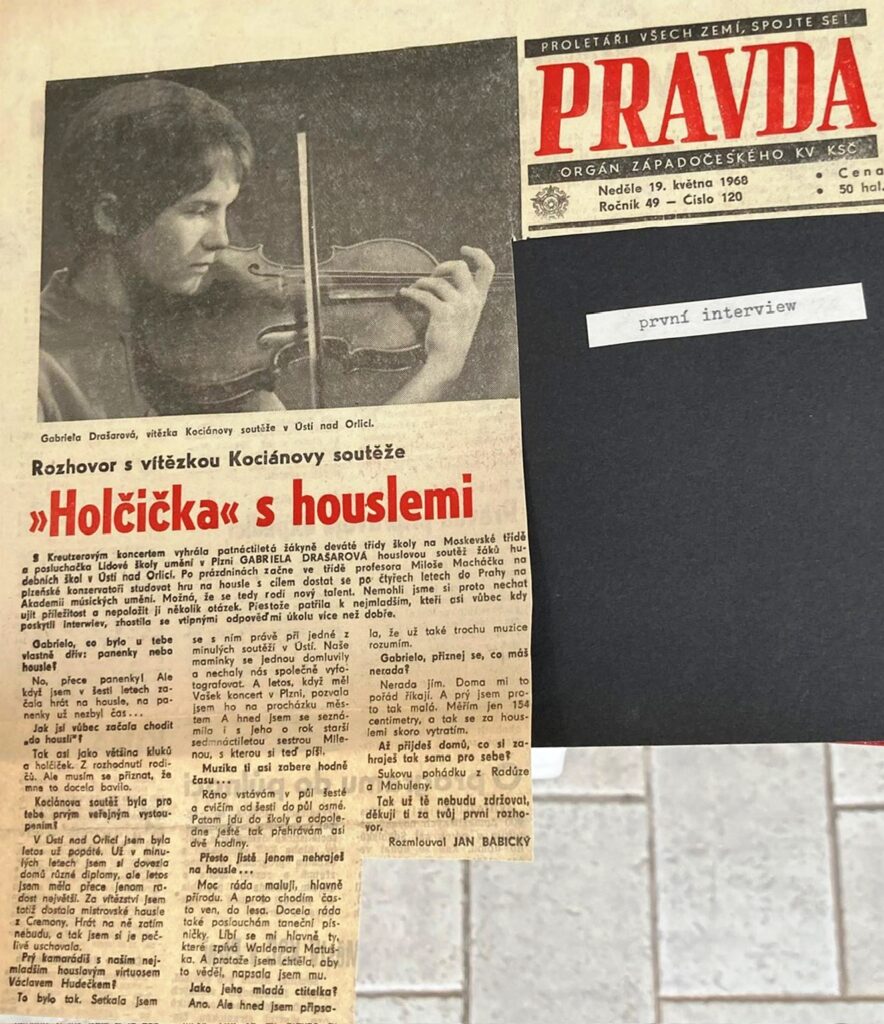
At the age of fifteen, I won the Kocian Violin Competition, which led to an unexpected rarity. The Pravda newspaper dedicated its front page – a space that had always been the domain of political news – to me. The extensive article, featuring a large photograph, included an interview about my future career and my dream of one day performing at the Prague Spring Festival. After the competition, I graduated from the conservatory in Pilsen, still under the guidance of Professor Macháček, and in my fourth year, I was accepted into the Academy of Performing Arts (HAMU) in Prague. It was the last year when the political and family background check was not yet taken into account. Both of my parents were non-party members, and my grandmother was considered a disruptive bourgeois element; a year later, I certainly would not have been admitted. At HAMU, I was in the class of Professor Marie Hlouňová, a former soloist of the Czech Philharmonic. I owe her for everything she passed on to me, which equipped me for a successful professional career.
Communism was generally criticized: there was a lack of freedom, travel was impossible, harsh censorship prevailed, banned books were smuggled from abroad, the economy stagnated, and so on. The only area in which the system surpassed Western countries was music education. With a few exceptions falling under Pragokoncert, performing artists were not freelancers; everyone taught at the academy or conservatory and passed on the most valuable knowledge to the younger generation, which guaranteed a high standard in the field.
After graduating from HAMU, I won an audition for the Frankfurt Opera. At the same time, I was the concertmaster of the renowned chamber orchestra Deutsche Bachsolisten, fulfilling my dream of performing at the Prague Spring Festival in 1981. I stayed at the Frankfurt Opera for eight years, and then an incredible coincidence entered my life, unexpectedly catapulting me to Italy. During a summer vacation in Corsica, I met my future husband. We fell in love, but there seemed to be no way to organize a life together. Carlo was from Naples, a successful physician and a lover of classical music. I was an established concertmaster in Germany with a permanent position in Frankfurt, just a four-hour drive from my parents in Pilsen. The only guiding light toward a solution was my knowledge of Italian, which I had enthusiastically studied back in Prague. It was up to me to sacrifice my life security and try to change the course of things. This meant preparing for a new audition at the San Carlo Theatre in Naples. For the time being, we decided to handle the situation with mutual visits. Carlo flew to Frankfurt, and then it was my turn to travel to Naples.
The sudden leap from the regulated German environment into the vibrant, rule-free city of Naples was a huge shock to me
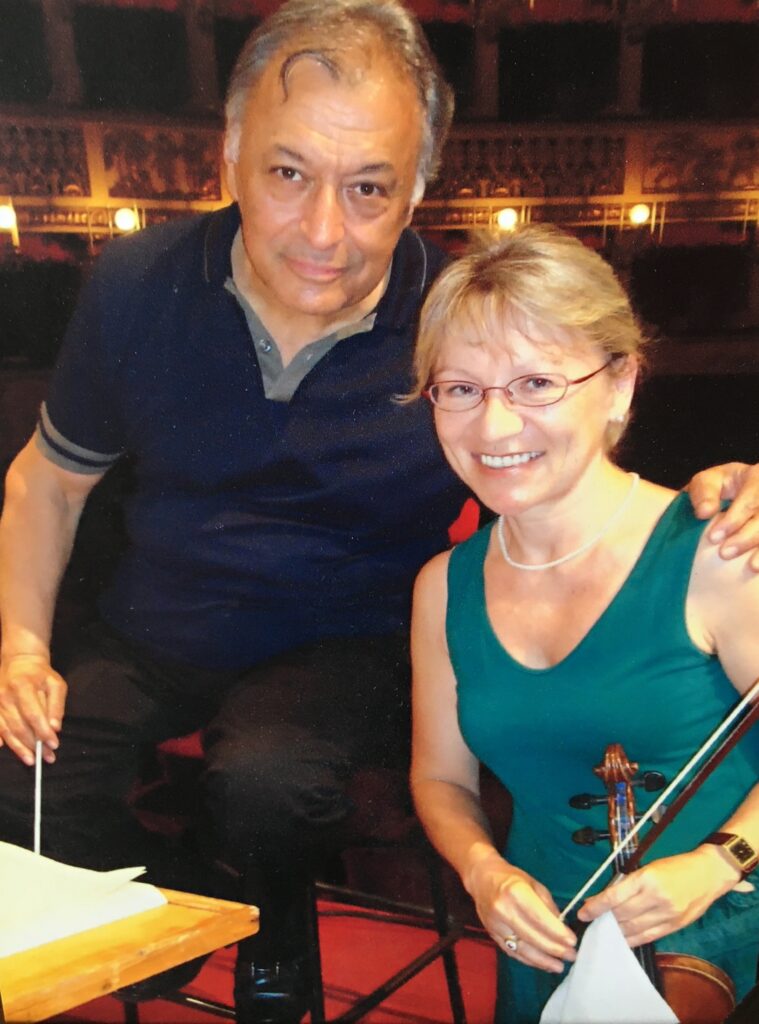
I planned five days of vacation and set off with a suitcase and, of course, my violin. Time for practicing can always be found, and the plan for the upcoming audition required it. Meanwhile, Carlo got concert tickets for the theater. After the performance, we waited for the musicians to get some information about the date of the next audition. The answer was shocking: “Tomorrow!” In the morning, I arrived with a pounding heart. At the reception desk, they gave me a personal data form to fill out, which authorized me to join the other candidates. This surprised me, as in Germany, it was necessary to receive a written invitation. It turned out it was a good thing. I actually won the audition, returned happily to Frankfurt, and astonished all my colleagues when they asked how my vacation was by declaring: “Perfect, I’m moving to Naples! I won the audition for the Royal Theatre San Carlo!” It didn’t matter that the position I gained was for a regular player in the first violin section; a life together with Carlo was more important. A year later, I passed the audition for the principal of the first violins and concertmaster, which returned me to my previous job category from Frankfurt. I played in the theater for thirty years, and my husband and I got married after four years of living together.
The sudden leap from the regulated German environment into the vibrant, rule-free city of Naples was a huge shock to me. Visiting as a tourist is a pleasant distraction; the city’s atmosphere, with its characteristic folklore, brings a sense of lightness and fun, and Neapolitans are spontaneous, witty, and welcoming to all foreigners. However, living and working in this incredible whirlwind of emotions—both positive and negative—is a different story. The Neapolitan mentality is unique; it is a blend of rebellion against rules that borders on anarchy. Breaking rules is a favorite, entertaining sport. In daily interactions, a light, ironic attitude toward life prevails. The symbol of local irony is the figure of Pulcinella, a nervous white clown who makes fun of everyone. A great source of support during my first years in Naples was the presence of the Czech Honorary Consulate, where I registered immediately and regularly participate in its cultural events until now. We celebrate important anniversaries of prominent figures, from Mysliveček to Kafka. Interesting thematic lectures are organized; this year, we celebrated the fifteenth anniversary of the Czech school led by Helena Schwarzová. Of course, there is never a shortage of a final dinner together featuring Czech dishes, musical performances, beer, and cheerful conversation in Czech mixed with Italian.