



Marie Havašová
I was born on June 16th, 1918, in Ostroměř near Hořice. My father, Karel Rumler, had completed military service in Vienna and then apprenticed to become a locksmith. He was quite successful and over time supervised the construction of railway bridges. My mother, Marie, was a lady with very modern views. She thought that girls also should have an education, not just be locked up in a kitchen for their whole life.
after Neville Chamberlain´s agreement with Hitler in Munich, we were occupied by Germany.
In 1936 I went to England as a student for six weeks. That was my first experience of the western world. I went there via Paris where my older sister Ema and her husband Jindra Kalhous were studying at that time. I stayed for a couple of days and they showed me the beauty of that big city. In 1938, the Germans wanted to annex the border regions known as the Sudetenland. The question on everyone´s lips was whether our people should be fighting or not. Many military trains were passing through Ostroměř, where I lived and where our father had a state house as inspector of railway lines. I remember bringing food to the soldiers. Everyone was expecting the war which didn´t come for another year. A few months later, after Neville Chamberlain´s agreement with Hitler in Munich, we were occupied by Germany. I was working in Prague when it happened, employed by Mr Vohryzek´s lawyer´s office. He was a Jew and employed another Jewish lawyer, who committed suicide when the Germans came.
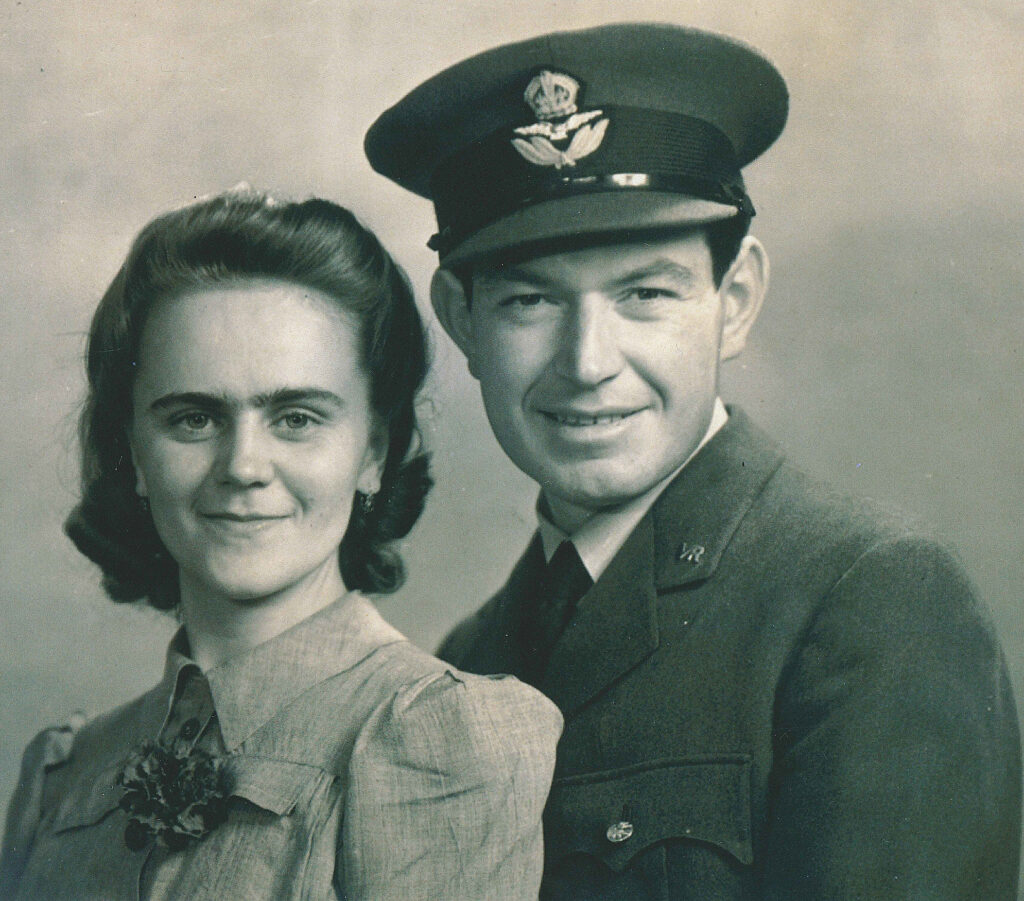
Luckily, I got permission from the Gestapo to leave the country. I took the train to Holland and from there, I continued to England again. I simply loved it there. It was such a mysterious place for me. I enjoyed reading all the stories, especially Sherlock Holmes, full of mistiness and fog, umbrellas and bowlers, gentlemen reading The Times. All that fascinated me. I enrolled at Cardiff University, and eventually got a BA in English, Economics and Philosophy. One day in London, I met Pavel, a Slovak member of the Czechoslovak arm of the RAF. We started to date and married on August 15th, 1940. One day during the Blitz on London I didn´t manage to reach the Tube station which was our designated bomb shelter. That was lucky because the water mains were hit by a bomb and almost everyone drowned.
When the war was over, I had another lucky escape. I was already on a bomber plane for Prague when an important person who had to be back that day for a meeting was given my seat. The plane crashed and no one survived. We returned to Czechoslovakia where my husband Paul, who had been a liaison officer, hosted many important people like the famous prima ballerina Beryl Grey. We were also friends with Prince Bernhard of the Netherlands. Paul, who was fluent in English and German, was working at the Ministry of Foreign Trade, responsible for negotiations with Sweden. I got a pretty good job at an import and export company in Prague, but Pavel correctly sensed the atmosphere in the society had changed somehow. He wanted to go back to Britain. Life went on and our first son Michael was born in Prague in July 1947. After the Communist putsch in 1948 it became clear Pavel was in danger. One day they took him to Pankrác prison. He was held in custody for three months, from November 1948 to February 1949. Five prisoners were placed in a cramped cell designed for solitary confinement. One of them, the leader of the student anti-communist resistance group Boris Kováříček, was executed, Paul´s wartime acquaintance from RAF Josef Čapka was sentenced to ten years, and two other fellow prisoners received twenty-five year sentences each. Thanks to some contacts I had, Paul was luckily released.
In September 1949 we were given 48 hours to leave Czechoslovakia. Paul´s Jewish connections provided us with deck tickets on an “Exodus” type boat from Bari in Italy to Israel where we lived for a year. At first, we were living in a refugee camp near the town Hadera. Paul tried to do business as a representative of a Swedish company, but without Arabic it was quite challenging to reach the customers. I used to go to one family as a cleaning lady. I also worked at a banana plantation. Later, Paul managed to regain entry to England as a former RAF officer, and we left Israel in May 1950. We lived in Letchworth in Hertfordshire and Chelsea for another year, staying with the Russell Scott family. Scott was a world pioneer in Esperanto and among visitors we had the pleasure of meeting George Bernhard Shaw.
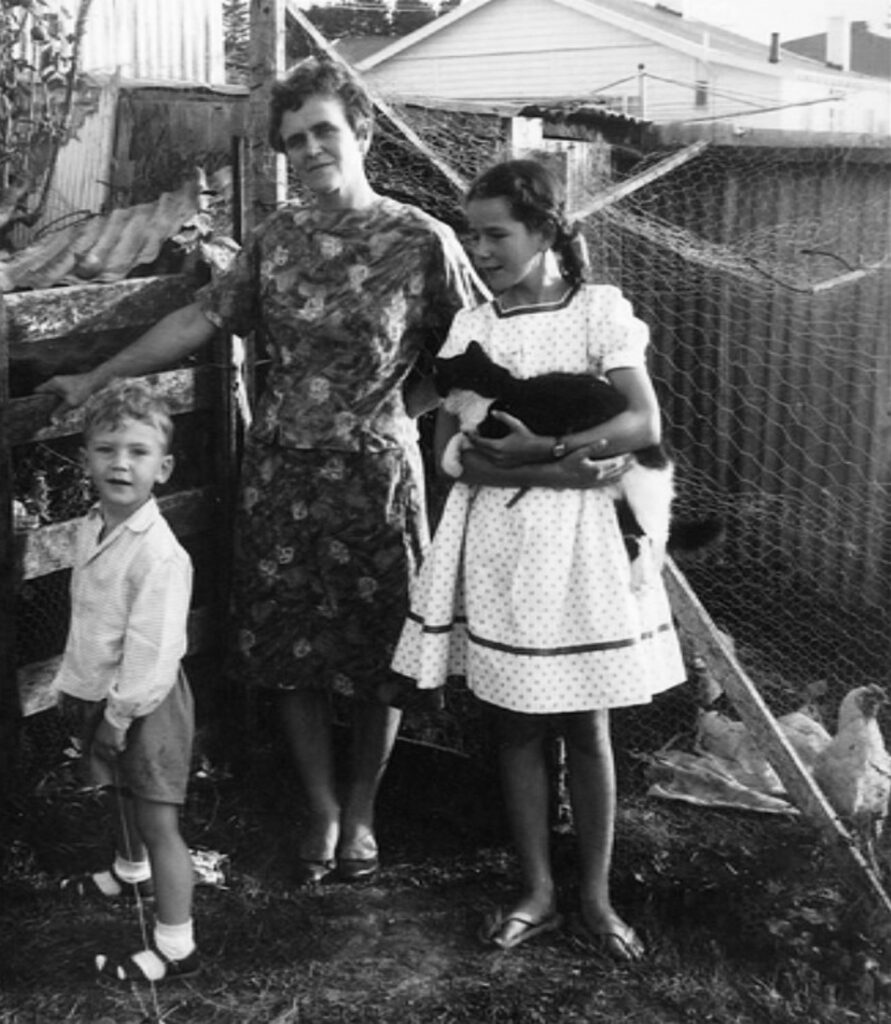
In Papatoetoe we soon had a small farm with 20 goats
We applied for visas to Australia, with no success. My sister Ema and her husband Jindra were already in New Zealand and their friends agreed to sponsor our trip and provide guarantees. At first, we were all sleeping in a small apartment in Auckland. Emma, who became head cook at the Auckland Railway Station, went to an auction and bought an old wooden house from the turn of the century which we all shared. The beginnings were not easy but this generation of Czechoslovaks was obsessed with making a new home for themselves, not renting. Paul worked very hard, at first in the meat works doing night shift and the worst jobs imaginable to earn enough money. Later he became a carpenter and built state houses which provided homes for poorer people. Paul and I soon bought an old wooden house at 16 Spring Street, Papatoetoe which was a suburb of Auckland, 10 miles from the city centre. The house came with a 2-hectare property which reminded me of my childhood in Ostroměř where I used to look after the geese and the goats. In Papatoetoe we soon had a small farm with 20 goats, ducks, chicken and a Jersey cow. I used to milk the goats and make butter from the cow´s milk. We also grew flowers like carnations and vegetables and sold them to the commercial markets. After his night shift at the meat works, Paul would come home in the morning and instead of going to bed would begin corresponding and dreaming of his own import-export company. His experience from Prague, along with his language skills, helped him. He imported tools and all sorts of things from Germany, Japan, Spain and even Strojimport and Merkuria in Czechoslovakia. When we finally bought our first car I became his driver. 16 Spring Street in Papatoetoe became our home until Karla was born in November 1953 and we needed more space, so we began building a new brick-veneer house which became 18 Spring Street, and this is where I live today. Karla is a psychologist specializing in problem children. In June, 1961, Ondrej was born and became a film maker like his elder brother, Michael. In 1970, we went for the first time abroad. It actually was a half-year trip around the world which we really enjoyed. We visited Michael in Switzerland where he was studying at the University of Zurich. 20 years later, after the Velvet Revolution, we visited London for an emotional meeting of all the surviving Czechoslovak veterans from their RAF days during WWII. Sharing stories with old friends who had been victimized by the communist regime was very moving for Pavel.
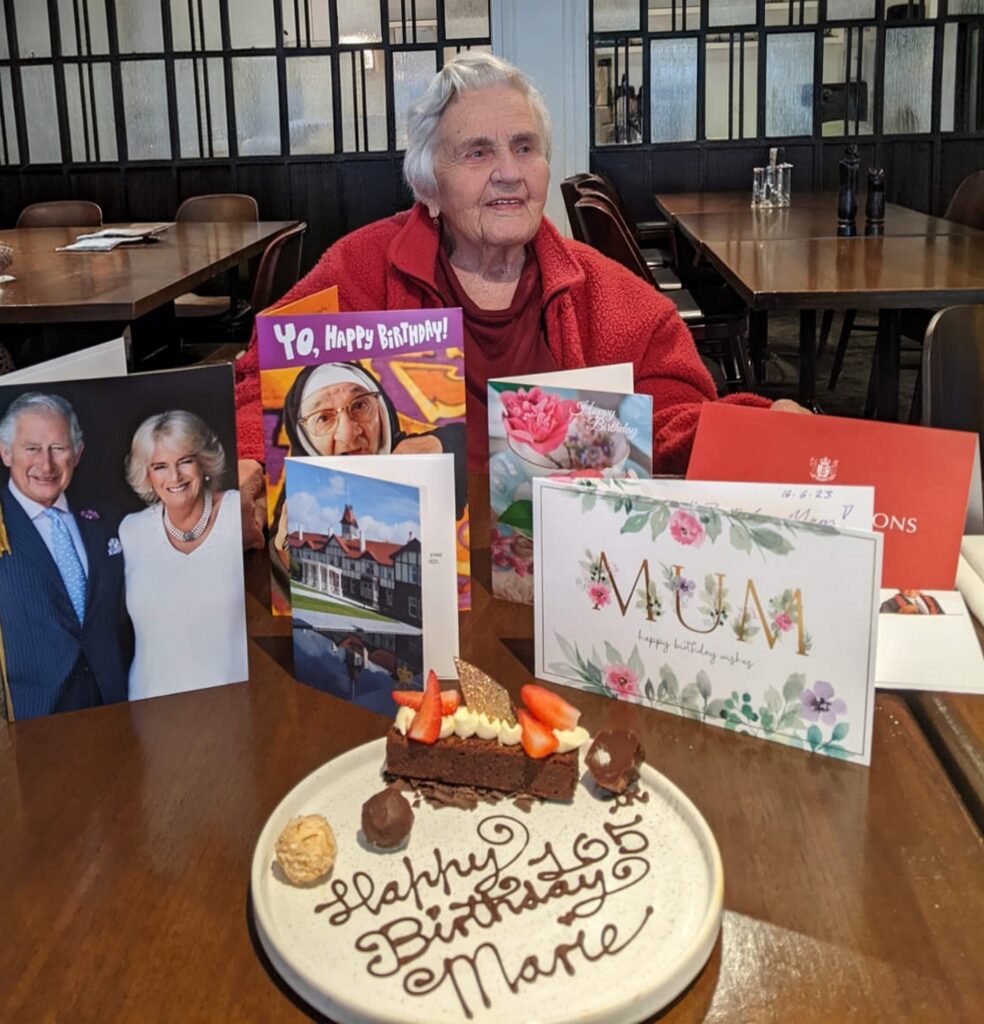
Mrs. Marie still lives in Auckland and is currently the seventh oldest resident of New Zealand. We wish her all the best on her 108th birthday and join King Charles III and his wife Camilla, and President Petr Pavel.
Daniel
Vsechno nejlepsi k narozenim, pani Marie.
Je to uzasny vek a uzasny pribeh.
Preji mnoho krasnych a spokojenych dnu.
-Daniel z ChCh