


Zdeněk Kotásek
I was born in 1926 in Skřečoň—a suburb of Bohumín near the Polish border—where my father was working for the Czechoslovak State Railways at the time. After six years in Bohumín and a brief stay in Olomouc, our family finally settled in the small village of Kvítkovice, not far from Zlín. At that time, under the leadership of Tomáš Baťa, the city was transforming into a dynamic global hub for the footwear industry. As a boy, this made a profound impression on me. However, my peaceful childhood was interrupted by the dramatic autumn of 1938 and the subsequent occupation; I remember weeping alongside my teachers at school as we watched the German army arrive. My original dream of attending the grammar school in Kroměříž vanished, as secondary schools and universities were shut down. Consequently, the only remaining hope for a quality education and a career lay in the Baťa educational system in Zlín. In August 1941, I successfully passed a rigorous two-day entrance examination, from which only a few hundred boys were selected out of thousands of applicants.
I had always dreamed of designing aircraft. After the entrance exams, I went to the personnel department and expressed my desire to work at the aircraft factory in Otrokovice. They told me that aircraft manufacturing did not have much of a future at Baťa, but that they were in need of young people for the chemical and textile divisions. I was sent to the women’s hosiery knitting department, where 300 girls worked alongside just three boys. I didn’t enjoy working on the textile machinery at all, so after six weeks, I decided to feign a vision problem when seeing the factory doctor. Fortunately, he was kind and issued a medical report recommending a change of assignment; however, the personnel department informed me that with such eyesight, I could not work in the mechanical engineering division, and they sent me to the tanneries instead. At the same time, I began my studies in the chemistry department at the Baťa Technical School in Tomášov. The program lasted six years and was conducted under an extremely rigorous regime, characterized by near-military discipline. We would wake up at 5:30 a.m., work an eight-hour shift in the factory, and then attend three hours of lectures in the evening, starting at 6:15 p.m. Yet, because Czech universities had been closed, we were taught by outstanding university professors who had found refuge at Baťa’s research institute; consequently, the quality of instruction was exceptional. Out of the original 180 boys from seven classes in 1941, only a single class—with 21 graduates—made it through the rigorous selection process to reach their final exams.
I traded bottles of slivovitz plum brandy and smoked sausages for hand grenades, pistols, and landmines, which we then passed on to the partisans
During the war, I was also a member of a rowing club. Our coach—an ex-officer in the Czechoslovak Army—would train us in grenade throwing and marksmanship after our rowing sessions. In 1944, I established contact with the “Olga” partisan group. With the Hungarian soldiers stationed in Kvítkovice, I pulled off my “first successful deal”: I traded bottles of slivovitz plum brandy and smoked sausages for hand grenades, pistols, and landmines, which we then passed on to the partisans. In early May 1945, my friends and I volunteered to join Red Army; I was issued a fur hat with a red star, an anorak, and a submachine gun, and I took part in the liberation of Moravia, advancing as far as the border of Bohemia. After the war ended, a friend and I traveled to Plzeň, hoping to enlist in the American army to fight against Japan; however, an American officer there sent us home, telling us that our patriotic duty was to help rebuild the Republic.
In 1947, I graduated from secondary school and secured a corporate scholarship to study at the Technical University in Brno. The scholarship required me to work 20 hours a week at the institute run by the renowned Professor Kubelka—a world-leading authority on leather and water technology. Drawing on the four years of experience I had already gained in tanneries, I soon took charge of the physics laboratory, which was equipped with state-of-the-art spectrographic instruments from Great Britain. Within just a year, I published my first scientific paper. In 1952, I completed my studies with honors and earned the title of engineer. However, the political climate following the events of February 1948 dealt a severe blow to academic life. During the political purges, I managed to save my position solely thanks to my background as an industrial worker and my participation in the resistance toward the end of the war. I returned to the Leather Industry Research Institute in Otrokovice. In December 1953, I married the love of my life, Helena; our son Dušan was born in 1954, followed by our daughter Ivana in 1956. In 1959, I successfully defended my thesis and earned the degree of Candidate of Sciences. In 1964, I completed a French language course in Besançon and spent a year working at the EPT and CTC research institutes in Lyon. At the end of 1965, I was appointed General Director of the research division at the Leather Industry Institute in Zlín-Otrokovice, overseeing a staff of 170.
During the Prague Spring of 1967–1968, my colleagues and I fully supported the country’s political and economic liberalization. However, following the arrival of the Soviet occupiers in August 1968 and the onset of the harsh “normalization” period in 1969, a colleague warned me that I was facing political liquidation. In February 1970, the Communist Party’s screening commission labeled me a counter-revolutionary; I was stripped of all my positions and removed from the institute’s leadership, hit with a travel ban, and my children were barred from pursuing higher education. Yet, before all these punitive measures could be fully enforced, a friend from the Ministry of Industry offered me a position leading a seven-member team of technical assistance in Sri Lanka. On March 13, 1970, I left for Colombo, while my family remained in Czechoslovakia as hostages. Life in Sri Lanka presented an incredible contrast between the exotic tropical environment and the constant anxiety stemming from separation from home and family.
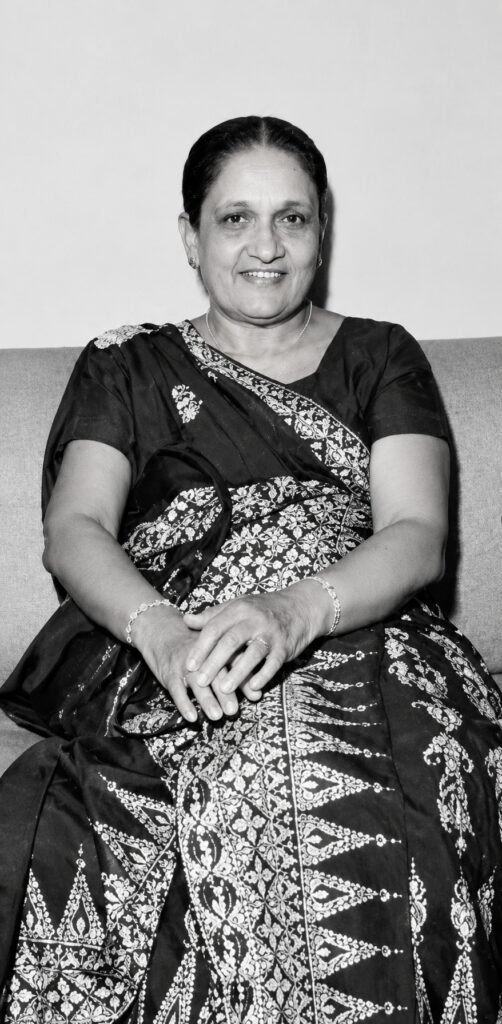
I provided weekly progress reports on our work to the Minister of Industry, Siriwardene, and delivered detailed monthly reports during personal audiences with Prime Minister Sirimavo Bandaranaike herself. During these meetings, the Prime Minister showed a deeply human interest in our personal circumstances. When I explained to her, quite openly, that our families had remained in Czechoslovakia and that we could not continue working in Colombo long-term without them, she was deeply moved. In October 1970, prior to her state visit to Eastern Europe, she promised me that she would personally intervene in Prague at the highest level. She kept her word, and two days before Christmas 1970, a miracle occurred in Colombo: the families of every member of our team arrived at the airport. My wife, Helena, brought our two older children, as well as our youngest daughter Helenka, who arrived as an eleven-month-old infant. Life in Colombo took on a new dimension, even though we lived in a state of constant uncertainty regarding the future. As our two-year contract neared its end in 1972, we shipped our packed belongings and possessions ahead to Czechoslovakia and prepared for our return. Just then, however, I received a warning letter from a friend back home, strongly cautioning me that trouble awaited us in Prague. At that moment, my wife and I decided to take a decisive step: we contacted the Australian Embassy and, instead of flying to Prague, arrived in Sydney with our children in August 1972. Back home, we were sentenced in absentia to several years in prison, and our property was confiscated.
Our beginnings in Australia were extremely modest and challenging. With almost no money, we settled in Adelaide and spent our first year living in the Pennington Hostel, in corrugated-iron huts. I secured a position with G. H. Michell and Sons—a company that operated two tanneries in Thebarton—where I worked as the head of technical development. I was shocked to find that the local tanning technology was roughly 20 years behind the developments in Czechoslovakia.
I led extensive environmental projects focused on wastewater treatment in India, Africa, Pakistan, and Bangladesh
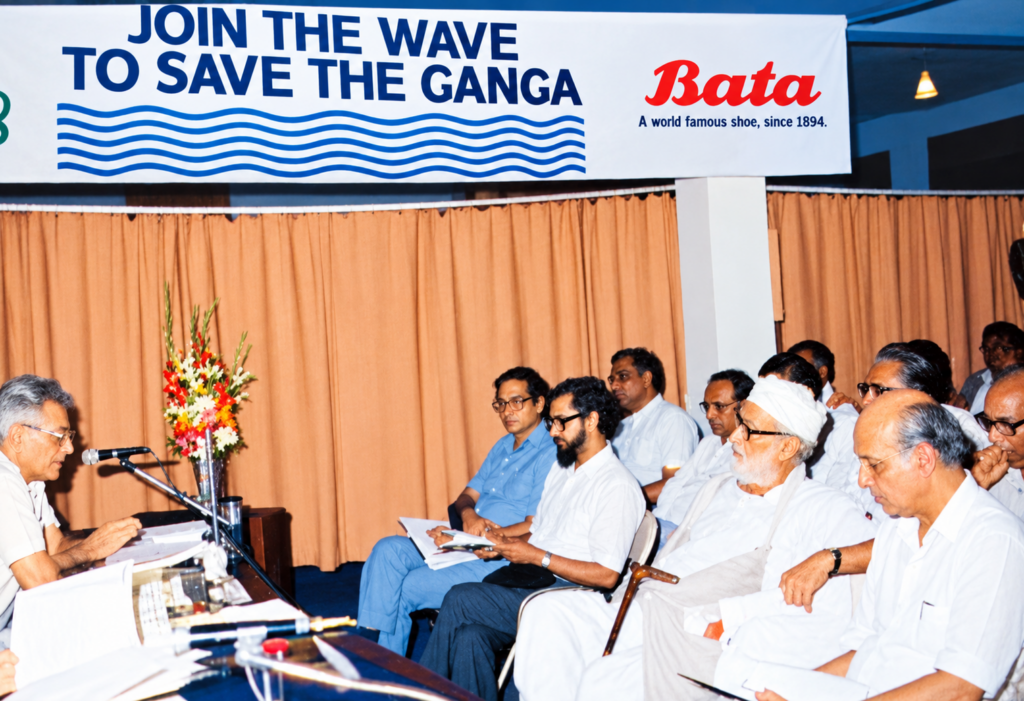
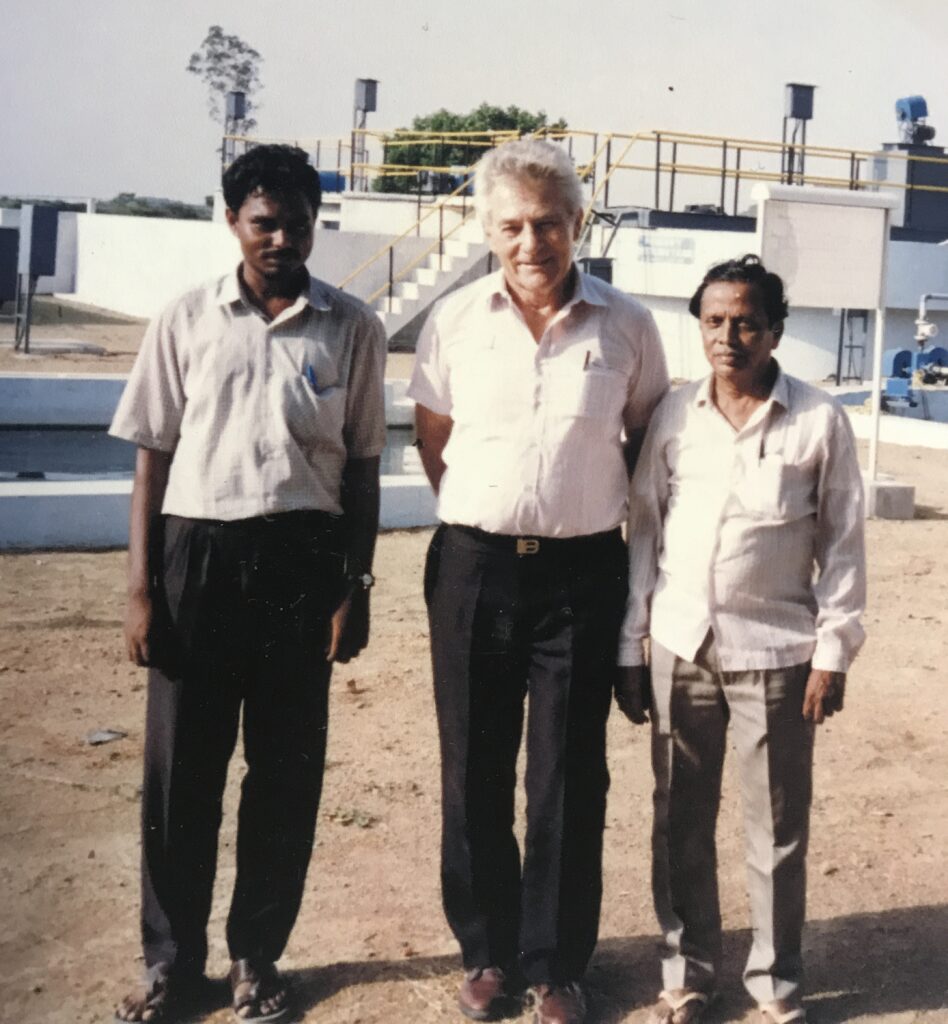
After five years with Michell, I felt that my professional prospects were stagnating; consequently, in 1977, I accepted an offer from Baťa International and moved to India. Initially, I worked—without my family—in the remote village of Mokamehghat in northern Bihar, on the banks of the Ganges. This location housed the largest tannery in India—and indeed within the entire Baťa group—employing 700 people. Conditions there were harsh—one had to travel 100 kilometers just to get ordinary bread, and only three people in the entire village spoke English. After seven and a half years, I was rewarded with a transfer to Calcutta, where I became the head of Bata India. In this role, I oversaw three large tanneries, research and development, and environmental projects for a company with 16,000 employees and an annual production of 65 million pairs of shoes. I designed and built the very first tannery wastewater treatment plant in all of Asia. Meanwhile, in Australia, my son Dušan successfully completed his medical studies and became a respected expert in clinical oncology; my daughter Ivana studied library science, and my youngest, Helena, studied geography with a specialization in satellite imagery.
In 1992, I accepted an offer from the United Nations Industrial Development Organization (UNIDO) to serve as a chief technical advisor. I led extensive environmental projects focused on wastewater treatment in India, Africa, Pakistan, and Bangladesh. In 1995, I returned to Adelaide and continued my international consulting work until my retirement. After the Velvet Revolution, I happened to run into two former colleagues at a pub in Otrokovice—men who, during the political purges, had been tasked with getting rid of me. They were very apologetic, but I simply waved it off, and we had a beer together. My wife and I adopted a philosophy that there is no point in regretting the past or wasting energy on how things might have turned out differently. We live in the present and the future, and our home in Australia is where our family is.
Zdeněk “Danny” Kotásek passed away in Adelaide, South Australia, in 2015. Thanks to a meeting with his still-vibrant wife, Helena—born in Nice to a Czech father and a Belgian mother—we now have his fascinating story.