


Václav Kostroun
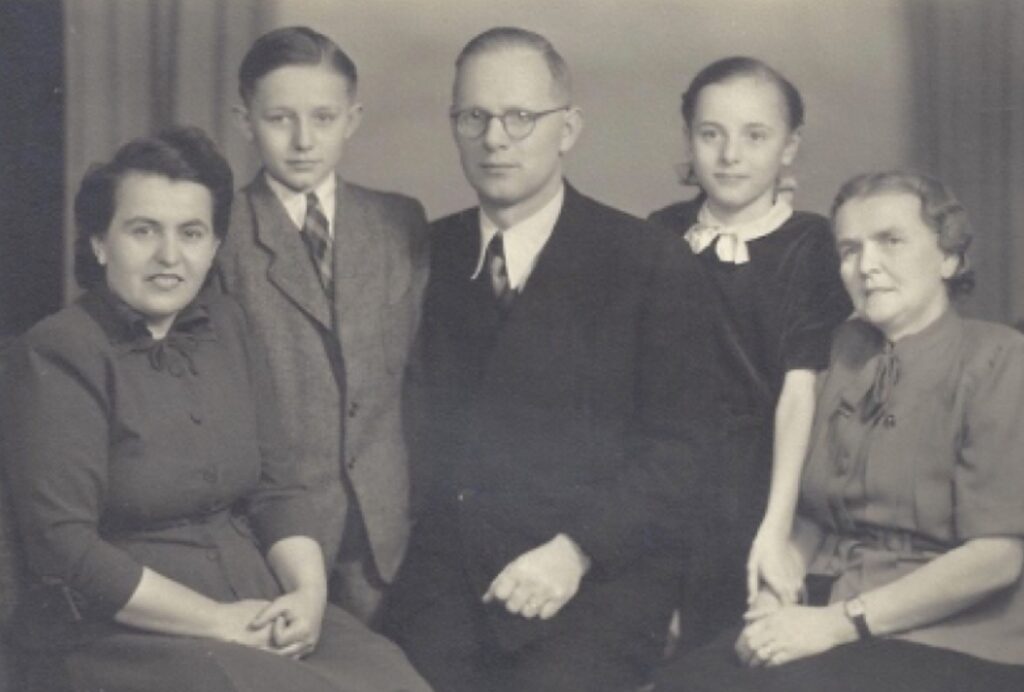
This is the story of one family, whose lives, like those of countless others, have been profoundly affected by the two scourges of the twentieth century, National Socialism and Communism. The main protagonist is my father, Vaclav Kostroun, born on August 31, 1907 in Slavce near Trhove Sviny, a small village in Southern Bohemia. He was the youngest of three children born to a very poor family. As a precocious child, he obtained a scholarship to attend high school in Ceske Budejovice. After graduating in 1926, he went on to Prague to study engineering at the Czech Technical University, from which he graduated with engineer degree on July 24, 1932. For the following two years, he served in the Czechoslovak Army in a tank unit with the rank of Captain.
In May 1934 he was hired by Ceskoslovenska Zbrojovka A.S. Brno (Czechoslovak Armament Works) where, as plant manager he supervised ammunition production and plant operations. On December 7th, 1935 he married my mother, Jana Marie Mastova, in Prague. In August 1937, he was sent to Brasov, Romania, to serve as plant manager of Metrom, S.A. where he supervised the installation of new machines and facilities for ammunition production. I, Vaclav Otakar, was born there on December 30, 1938.
In March 1940, the entire Zbrojovka contingent in Brasov was sent to France to help with the war efforts. My sister, Jane Mary, was born in Paris on May 15, 1940. When it became clear that France had fallen to the Germans, my parents, my sister and I and our grandmother Ruzena Mastova were among the multitude of others that traveled South to Bordeaux to try get passage on ships leaving France. My parents and us children were able to board a ship that took us to Falmouth, England where we arrived on June 20, 1940. Our grandmother, however, was not so lucky, she had to stay in France and the Germans repatriated her to Prague.
In December 1945, the family returned to Czechoslovakia despite warnings from British friends not to do so
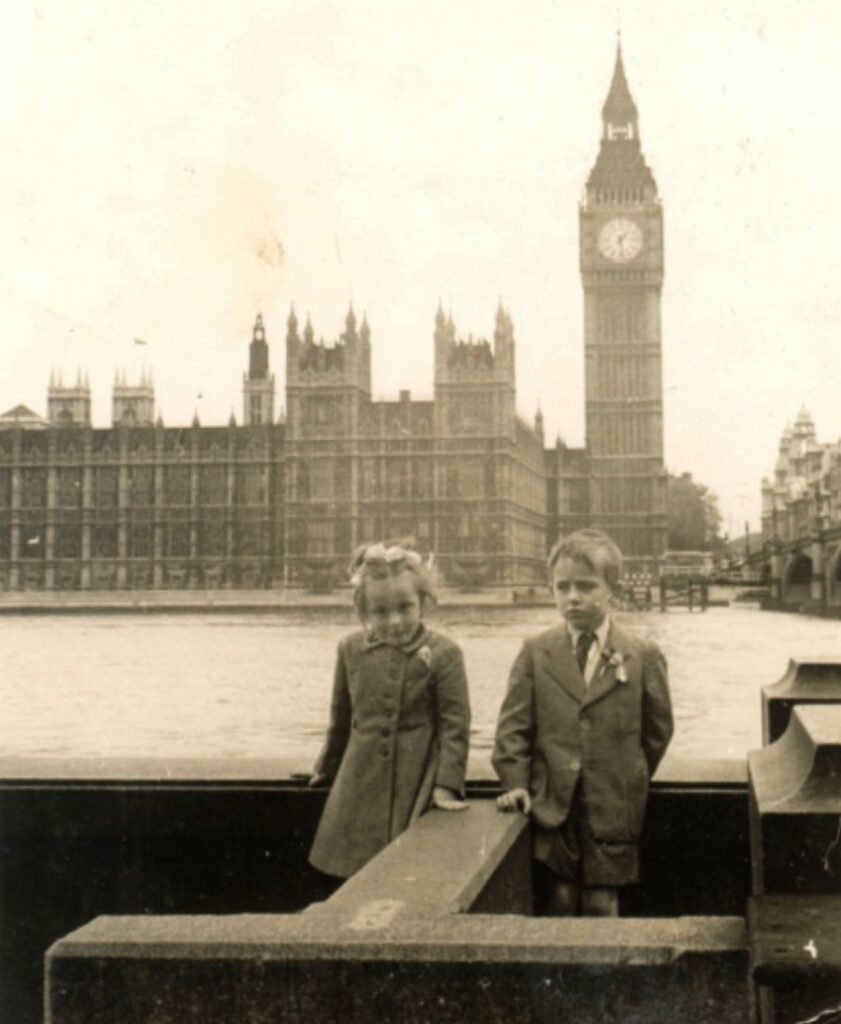
From June 1940 to September 1941, my father worked at the Bren Manufacturing Co. in Newcastle on Tyne where he worked on the BREN machine gun. (Brno-Enfield) was a one of a series of light machine guns made in the United Kingdom and used primarily by British Forces for about 60 years. In October 1942, my father joined the British Ministry of Supply in London as a technical assistant, and the family moved to London. We lived on Delaware Road, opposite the BBC studios. During air raids, the family would go down to the cellar, but when a bomb completely obliterated the row house next to ours, father decided that there was no point in going down to the cellar and we stayed in our second-floor apartment. In May 1945 father left the Ministry, and worked for the Czechoslovak government in exile as planning officer where he helped prepare plans and procedures for the post-war reconstruction of Czechoslovakia, and also served as repatriation and liaison by the Norwegian allied army.
In December 1945, the family returned to Czechoslovakia despite warnings from British friends not to do so. From December 1945 to August 1946, father was national manager of the Czechoslovak Clockmaking Works in Broumov, and from August 1946 to August 1949 the Technical Director of Sandrik, National Corporation in Mikulasovice.
After the Communist takeover in February 1948, the situation became very difficult, and my father decided to leave the country. This time, the entire Kostroun family, including our maternal grandmother Ruzena, managed to escape. We spent almost two years in Germany, where father worked as Director of the International Refugee Training Schools in Ingolstadt and Neuburg an der Donau in the U.S. Zone.
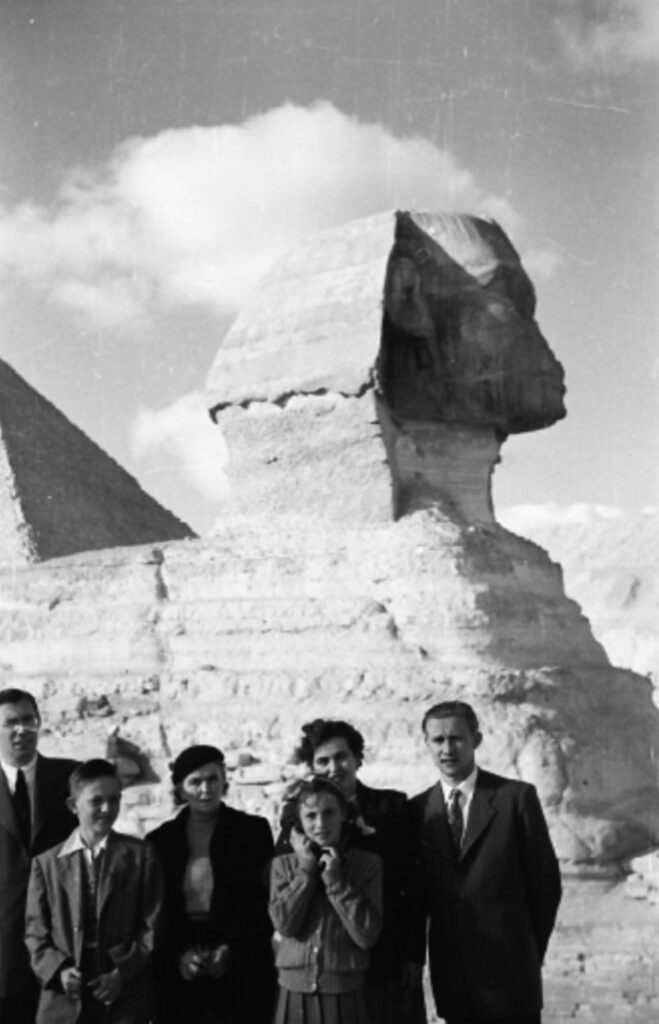
In March 1951, he began working for the Egyptian Government as a technical advisor, and the family moved to Maadi, a suburb of Cairo located 6 km South of the city. As technical advisor, he proposed a system of survey and registration of national resources, supervised its implementation and prepared a complete report emphasizing the economic and military consequences of each site. In 1954, Gamal Abdel Nasser initiated cooperation between the Egyptian Ministry of War and Marine and Soviet Bloc countries. For us, time to leave Egypt. The family had obtained permission to emigrate to Australia and the United States in early 1955. During our stay in Maadi, my sister Jane and I attended the Cairo American School for four years and became thoroughly “Americanized”. Accordingly, we convinced our parents to choose the United States over Australia. We arrived to New York City on June 9, 1955.
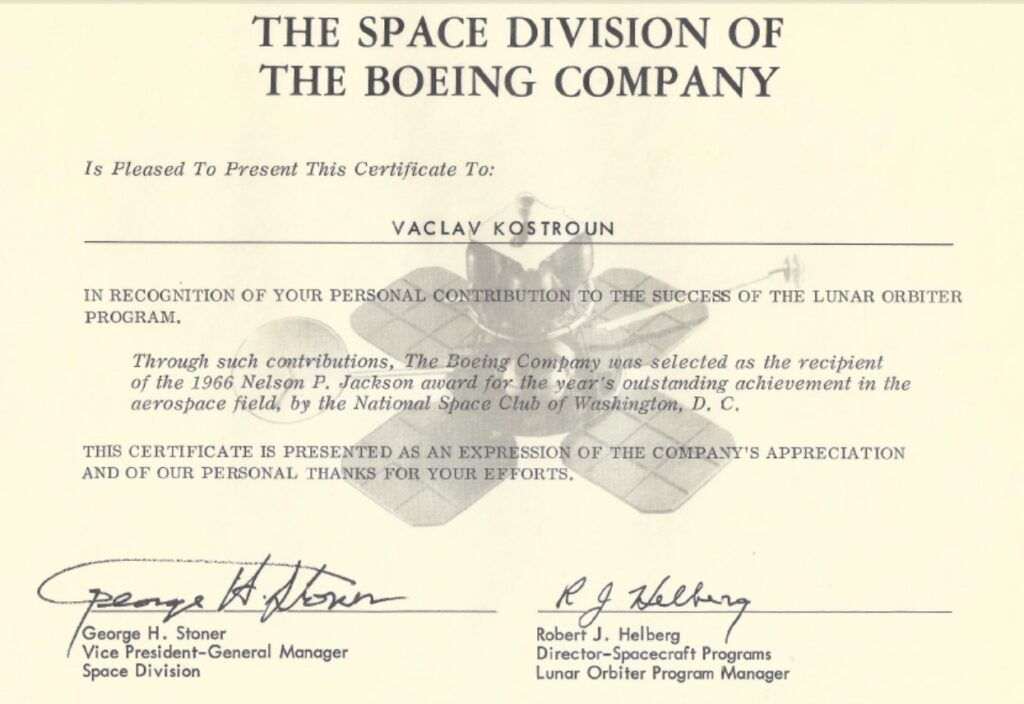
From June 1955 to August 1956, father worked as production manager at the Micromat Company in Hillsdale, New Jersey. The company was owned by a colleague of his from pre-war days in Romania. For reasons unknown, the past relation soured, and in October 1956 my father moved to Seattle, Washington, where he joined the Boeing Company as a design specialist. The rest of the family followed soon after. At Boeing, he had a busy career. He prepared maintenance manuals for the 707 and 720 series airplanes that involved the description, operation, removal, installation and checking of most systems. On the 737 he investigated systems and components for potential cost and weight savings in fuel, hydraulics, air-conditioning landing gear and flight controls, redesigning some components. He prepared the thermal control design for the Lunar Orbiter using heat load analysis and proposed design revisions to solve heat problems. He prepared the passenger and waste system, the emergency oxygen system, an emergency escape slide and its deployment for the proposed Boeing supersonic transport (project ultimately canceled). He designed the emergency oxygen system for the KC-135 “Nightwatch” airplane and directed its installation.
In 1969, the Boeing Company began to lay off employees, due to the oversaturation of the airplane market. My father was laid off in 1970, two years short of his retirement. In 1970, my parents moved to Ithaca, and later to Woodland, California, to be near my sister Jane, living in Sacramento. Vaclav Kostroun died in Woodland of colon cancer on May 20, 1993. He lived to see the fall of Communism in Czechoslovakia in November 1989 and that made him very happy. However, he never reconciled with the dissolution of the country in 1992. Our mother died in August 1997. Both are buried in Sacramento.
In August 1968, during the Russian invasion of Czechoslovakia I obtained my PhD
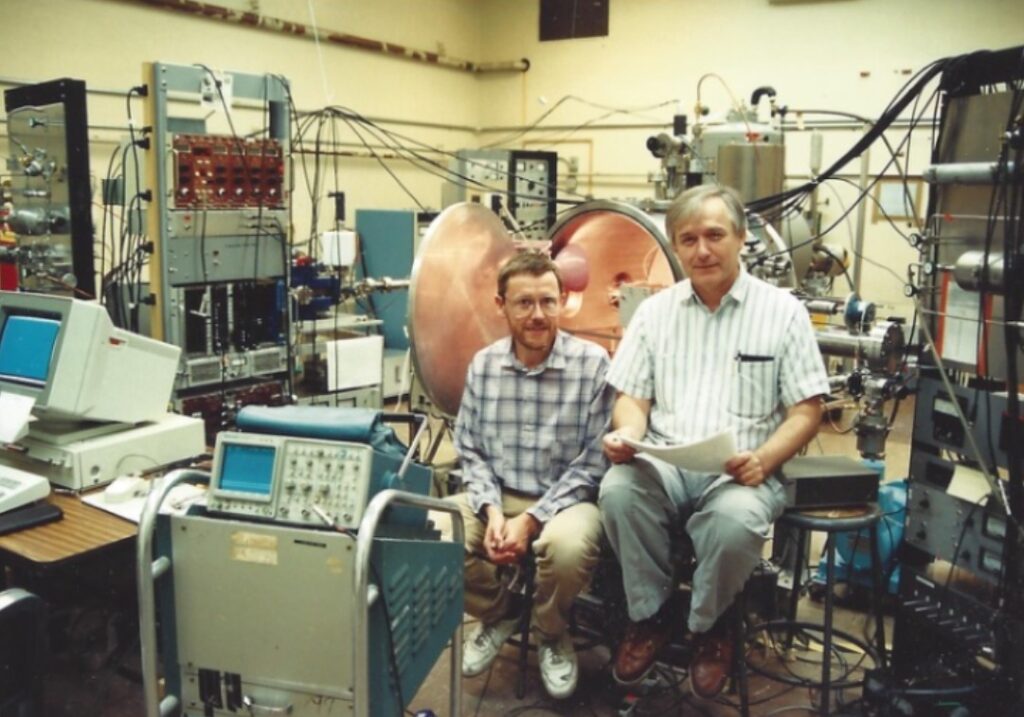
After all the family peregrinations, my life in Seattle was uneventful. In 1960, the family, apart from our grandmother, became U.S. citizens, ending eleven years of being stateless. I graduated from Franklin High School in 1957, and Jane from Roosevelt High School in 1959. We both attended and graduated from the University of Washington. In May 1963, I met my wife Winnie Johnston, and we were married in December 1963. The following year I started graduate studies in physics at the University of Oregon in Eugene, Oregon. Our son Vaclav Eugene (Eugene after his maternal grandfather) was born there in 1966. The same year, our grandmother died and her body was shipped to Czechoslovakia and buried in Prague. In August 1968, during the Russian invasion of Czechoslovakia I obtained my PhD. The next month, my wife and I and our 18 month old son drove from Seattle to Niagara Falls, Canada via the Trans-Canada highway. We arrived in Ithaca, New York on September 16 and I started my first job, a two-year appointment as Research Associate in the Department of Applied Physics at Cornell University. (Later renamed School of Applied and Engineering Physics.) In 1970, I joined the faculty in the same department, and our daughter Daniella Jane was welcomed into the world in February 1970. During my long academic career, I also visited technical universities in France, Brazil and, of course, the Czech Republic.
When the Voyager 1 probe was about to be launched in 1977, my colleague from the faculty Carl Sagan chaired the committee selecting the sound recordings that would travel with it into the depths of space. The sounds of the terrestrial animal kingdom, samples of music from different cultures and genres, the sounds of human footsteps, laughter and greetings in fifty-five languages were recorded on a special gold-plated copper disc. I was asked to say the greeting in Czech. It goes like this: “Dear friends, we wish you all the best.”
Voyager 1 has traveled more than 25 billion kilometers so far and is the most distant object from Earth ever launched by humans. Hence, my voice has reached such places as no other before…