



Helena Urválková
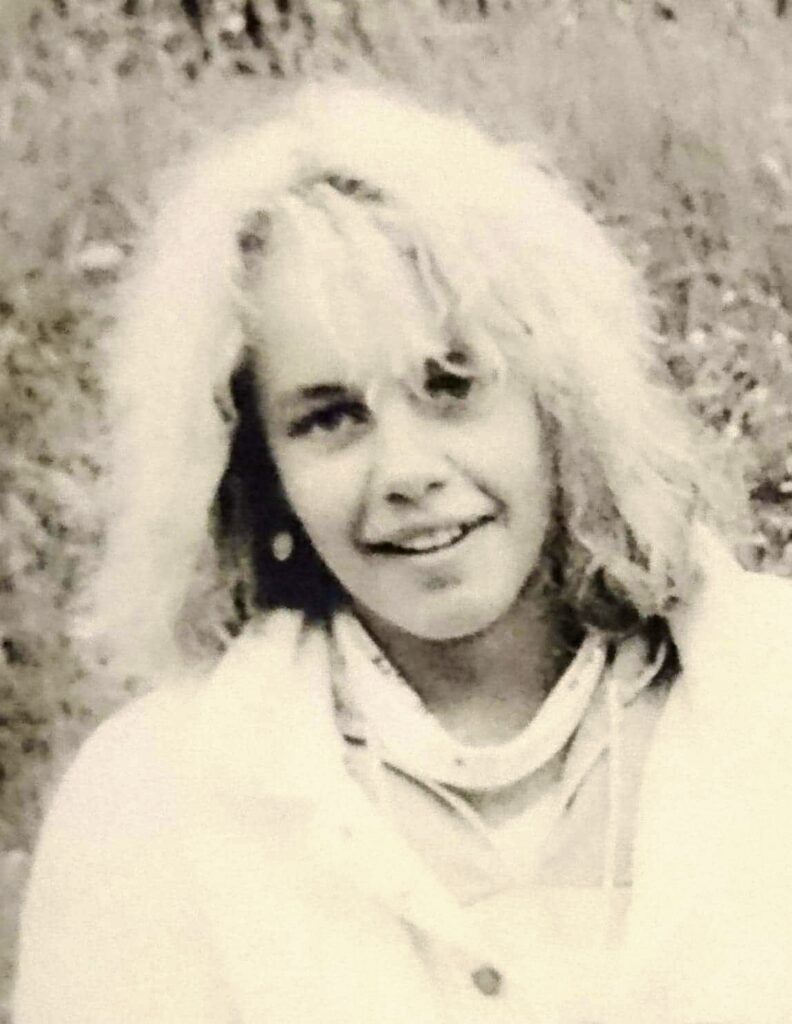
In the early spring of 1989, I was fourteen and a half and a freshman at the local grammar school when the big news suddenly came. My mother told me in confidence that she and my father were thinking of emigration. Such courage! My brother Daniel, who was four and a half years older, had apparently already agreed to their proposal to leave our home in Frýdlant, a small town near Jizera Mountains, and now it was up to me to say yes or no. For some time, as a primary school student in totalitarian Czechoslovakia, I had been happily living with the premonition that my adult life would be somewhere other than my homeland. It was a vague idea that I didn’t pay much attention to, even though it seemed a bit strange to me, when every attempt to imagine the future had the same result – it wasn’t in Czechoslovakia. Since I was already a big dreamer and adventurer back then, I didn’t resist it in any way and took it more as a matter of course. I was happy that something really important was finally happening in my life. It flashed through my mind what leaving home, perhaps forever, would actually entail. The thought of friends, school, grandmother, our dog Misha, aunts, uncles, cousins, hometown, our house, garden, surrounding forests. A dizzying fear ran through my whole body. But my brain already intuitively knew what was necessary in the given situation. I involuntarily suppressed the unpleasant feeling. My inner voice whispered to me softly, almost sacredly, that something fateful was at stake. The seductive whiff of adventure helped to win me over definitively to its side, and there was nothing more to deal with. The reward for the immediate decision was the intoxicating feeling of freedom. I began to look forward to this step into the unknown.
I instinctively understood that my parents Jiří and Helena, both at the age of 42, were fighting for a better life for our entire family
Even though puberty was really rough on me, I felt a responsibility not to disappoint my parents when I was entrusted with such a secret. In the time leading up to our departure, I was not allowed to tell anyone, not even my best friend. It was an almost superhuman, but at the same time very satisfying task, because I was proud that I was finally doing something specific in the fight against the regime. I had no idea how dangerous it was, and I only vaguely realized that the system at the time did not allow it. I was convinced with my whole being that it was the only right thing to do. I instinctively understood that my parents Jiří and Helena, both at the age of 42, were fighting for a better life for our entire family, especially me and my brother, as best they could. I did not know at the time that my father, as the organizer of the trip to Norway, from which we intended to emigrate, was summoned to the district committee of the Communist Party during the planning process, where he was threatened regarding the possibilities of my and my brother’s future studies at university unless a certain key official was placed on the list of trip participants. The rest of the school year was bathed in the sweet scent of dreamy possibilities, waiting for me somewhere on the increasingly clear horizon. I liked this way of escaping the gray of everyday life. I was happy. An uplifting feeling mixed with growing tension or excitement from the approaching departure.
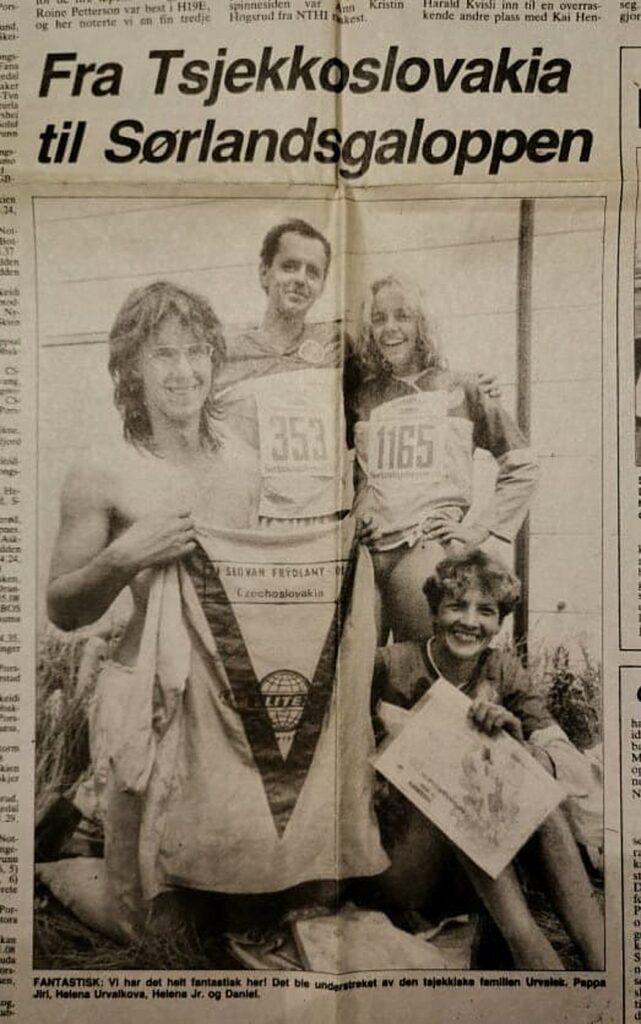
A great part of my childhood was sports, specifically orienteering. My father, as an enthusiast, founded a local orienteering club and our entire family actively participated in various events, from training sessions and annual meetings in our town, through district, regional and national races and championships, multi-day international competitions in Czechoslovakia, to trips abroad, first to the countries of Eastern Europe, until the beloved sport took us to the exotic nature of beautiful Scandinavia, to Norway, which became a new home for all of us. How natural it is to travel abroad and choose where in the world to settle. But no, in those days someone had the power to forbid the citizens from moving freely. Orienteering gave us, among other things, a unique opportunity to travel. It became increasingly clear to me that people in our socialist state were oppressed and unfree, and I didn’t feel like I was doing anything wrong.
I really had the highest expectations from emigration. I imagined that life would be completely different from then on, better, and I took it for granted that all the problems and conditions that people complained and cursed about in our society under communism would finally cease to exist. I saw the future as bright and sunlit. No matter how events unfolded, this feeling was actually the greatest gift, after the gift of life, which my parents gave me without realizing how much it meant to me. I felt like I was in a movie. Our family found themselves in the lead role in a drama about escaping from the Czechoslovak Socialist Republic. At home, while packing, I maniacally played Peter Nagy´s song “Love is here with us” and felt it´s surrounding us. I was convinced that the other family members felt the same way, and I wanted the whole family to believe the lyrics about love being here with us and that nothing bad in the world could happen to us if we stick together. Just like Nagy sang. We were not allowed to take anything with us that could reveal that we were leaving for longer than the two-week planned trip of the orienteering team to Norway.
... I have a good feeling about Miloš Forman's words that freedom must be sought primarily within ourselves
The original intention to continue the journey to happiness further to Canada was canceled. After less than a year of waiting in Norway we obtained a residence and work permit, even if only temporary at first. It meant simplifying the whole situation. Not so much for me. I must admit that despite all the feelings of responsibility and maturity, I also had a wild side. I was attracted to the city of New York with some inexplicable magnetism and it was a great disappointment when I learned that the trip overseas would not take place. I had viewed Norway as a transit station and everything was fine, but I did not like it enough to want to stay there. After all, I was in love with the vision of a bright future somewhere further away, where life was even happier, easier and freer. I was somehow obsessed with the idea of absolute freedom during my teenage development and a plan to escape to New York was born in my head. It is only a short distance from Canada after all. Like a burst avalanche or a broken dam, the stream of my desire to find the freest freedom in the world flowed and did not want to stop until it found itself in that dream place. And it had to happen right away, otherwise it would lose its meaning. Everything dreamed of had to be experienced. Today, some thirty-six years later, I have a good feeling about Miloš Forman’s words that freedom must be sought primarily within ourselves. I have not yet visited New York…
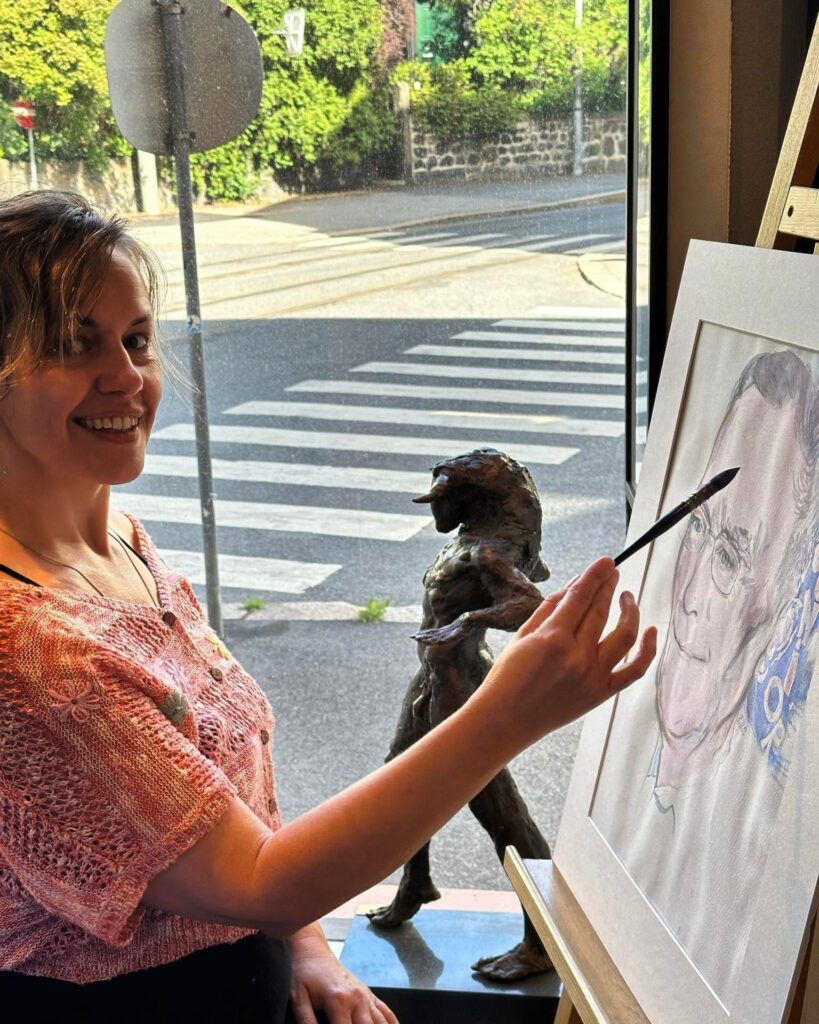
Helena Urválková still lives in Oslo, is a citizen of both Norway and the Czech Republic, makes a living as an artist and teaches drawing and painting. Her current specialization is portraiture. She collaborates with various galleries in Oslo and the surrounding area, and has exhibited her works in many places in both countries.
John Tyhurst
Helena, thanks for sharing your story or coming to Norway and sharing the “Czechoslovak Talks” project. You are a great representative of Czechs abroad, as you were at the Czech compatriots program in Poděbrady this summer!